India BIS Certification
Understanding What Will Be the India BIS Certification
India BIS Certification is one of the most powerful regulatory systems in the country, designed to make sure that products sold in the Indian market are safe, reliable, and of high quality. When someone asks what will be the India BIS certification, the answer goes far beyond a simple quality mark. It is a complete safety framework that protects customers and guides manufacturers toward better production. Over the years, BIS—short for the Bureau of Indian Standards—has grown into a strong national authority that shapes how industries operate.
Role of BIS in Ensuring Product Safety in India
The Bureau of Indian Standards (BIS) plays a critical role in maintaining product safety across the nation. Its impact reaches into almost every sector—electronics, steel, chemicals, household appliances, gold jewellery, cement, toys, automotive parts, and even packaged drinking water. When companies ask what will be the India BIS certification, many don’t immediately realise that BIS operates as both a regulator and a technical advisor, shaping how industries manufacture, test, certify, and sell their goods.
At its core, BIS is responsible for creating Indian Standards (IS), and these standards ensure that every certified product meets essential safety, durability, and performance benchmarks. BIS sets minimum quality requirements that manufacturers must follow—not only to protect consumers but also to create a fair marketplace where all businesses compete on equal grounds.
One of the most important roles of BIS is consumer protection. India is a price-sensitive country. Many counterfeit, low-quality, and unsafe products frequently enter the market. Without BIS regulations, consumers would be at higher risk of purchasing products that fail quickly, catch fire, leak harmful chemicals, or simply do not perform as promised. BIS certification forces companies to maintain quality and gives buyers confidence in their purchases.
Another essential function of BIS is standardisation. With over 20,000 Indian Standards published, the organization acts as a central governing body that ensures uniformity across industries. This means that a light bulb, cement bag, or mobile charger manufactured in one part of India will perform the same way as one manufactured elsewhere. Standardization improves efficiency, reduces product failures, and boosts industry reliability.
BIS also strengthens India’s global trade relationships. By aligning many Indian Standards with international benchmarks, the country promotes a smoother export process. Foreign manufacturers selling in India must also comply with BIS rules, ensuring that imported products meet the same safety levels as domestic ones. This prevents substandard international goods from flooding the market.
Additionally, BIS plays a vital role in modernizing industries. Through technical committees, research, and collaboration with manufacturers, BIS updates its standards regularly. These updates incorporate new technologies, sustainability guidelines, and best global practices. For example, LED lights, power banks, and smart devices were added to mandatory certification lists as consumer usage increased.
Finally, BIS enforces strict market surveillance. It conducts inspections, factory audits, and random product sampling from markets to ensure certified products genuinely meet the required standards. Manufacturers that misuse the BIS mark or violate compliance face heavy penalties, including fines and license cancellation.
Introduction Of India BIS CRS Certification
In today’s competitive electronics market, ensuring safety, quality, and compliance is not just a business advantage—it’s a legal requirement. The Bureau of Indian Standards (BIS), under the Ministry of Electronics and Information Technology (MeitY), governs the Compulsory Registration Scheme (CRS) to ensure that electronic and IT products meet the Indian Standards (IS) for performance and safety.
This article provides a complete overview of BIS CRS Certification, including its purpose, process, required documents, and product categories covered under the scheme.
What Is BIS CRS Certification?
The BIS CRS Certification, also known as BIS Registration under the Compulsory Registration Scheme, is a mandatory certification introduced by BIS in collaboration with MeitY.
It ensures that electronic and IT products sold in the Indian market conform to the applicable Indian Standards. Manufacturers, whether domestic or foreign, must obtain BIS CRS registration before launching or importing their products into India.
Key Objective of BIS CRS
The primary objective of BIS CRS Certification is to:
-
Safeguard consumer interests by eliminating substandard and unsafe products.
-
Ensure that electronic goods meet the quality standards set by BIS.
-
Prevent the sale of non-compliant electronic and IT products in India.
four types of certification which are listed below:
Types of India BIS Registration Schemes:
- ISI Mark Scheme Registration for Domestic Manufacturers: This scheme covers products under the compulsory BIS certification (Scheme-I) and allows manufacturers to register through either the normal or simplified procedure. The normal procedure involves factory evaluation, sample testing, and granting the BIS license within 4-6 months. The simplified procedure grants the BIS license within 30 days and is applicable for certain products, excluding specific categories.
- ECO Mark Scheme Registration: This scheme provides certification for environmentally friendly products. The products meeting environmental criteria and relevant Indian Standards receive the ‘ECO’ logo in addition to the ‘ISI Mark’.
- Foreign Manufacturers Certification Scheme (FMCS): This scheme is designed for overseas applicants or foreign manufacturers. They can obtain BIS certification for products under the Compulsory Registration Scheme (CRS) and compulsory BIS certification scheme (Scheme-I) by setting up a branch office in India and nominating an agent.
- BIS Compulsory Registration Scheme (CRS): Introduced by the Ministry of Electronics and Information Technology (MeitY), this scheme mandates BIS certification for specific electronic and information technology goods. Manufacturers must obtain BIS certification through registration based on self-declaration of conformity.

Validity of BIS Certification:
The BIS certification is typically valid for two years. Manufacturers can renew the certification if there are no changes in the product and prescribed standards, and the renewed certificate is valid for one to five years. Late renewal applications after the expiry period may incur an additional fee of Rs. 5000.
About the Bureau of Indian Standards (BIS India Certification)
The Bureau of Indian Standards (BIS) is the national standards body of India, established under the BIS Act, 2016.
BIS plays a crucial role in:
-
Developing national standards.
-
Granting licenses and certifications.
-
Conducting product testing and market surveillance.
-
Promoting consumer safety and product reliability.
Understanding the Compulsory Registration Scheme (CRS)
The Compulsory Registration Scheme (CRS) was introduced in 2012 by BIS in collaboration with MeitY.
Under this scheme, certain electronic and IT products are mandated to obtain BIS CRS certification before being sold, imported, or distributed in India.
Key Features of the CRS Scheme
-
Applicable to both Indian manufacturers and foreign manufacturers selling in India.
-
Products must conform to Indian Standards (IS).
-
Manufacturers must register each product model and brand separately.
-
Once approved, the product receives a unique BIS Registration Number and can display the CRS Mark.
Products Covered Under the BIS CRS Scheme
The list of products under BIS CRS certification is regularly updated by the Ministry of Electronics and Information Technology (MeitY). Currently, more than 75 categories of electronic and IT goods fall under the Compulsory Registration Scheme.
Some Key Product Categories Include:
-
LED lights and control gears
-
Mobile phones, tablets, and laptops
-
Smart watches and smart TVs
-
Power adapters and battery chargers
-
Electronic musical systems
-
Set-top boxes and routers
-
Microwave ovens and induction cooktops
-
CCTV cameras and recorders
Each category corresponds to a specific Indian Standard (IS) under which it is tested.
Why Is India BIS CRS Certification Required?
Manufacturers and importers must obtain BIS CRS Certification to legally sell or distribute electronic products in India.
Without it, products are considered non-compliant and cannot be marketed or imported into the country.
Benefits of BIS CRS Certification
-
Legal Compliance – Ensures your product meets the regulatory standards of India.
-
Consumer Trust – Builds confidence among consumers about the product’s safety and quality.
-
Market Access – Enables manufacturers to enter the vast Indian electronics market.
-
Brand Credibility – Enhances brand reputation and competitiveness.
-
Reduced Risk – Minimizes chances of product recalls or penalties due to non-compliance.
Documents Required for BIS CRS Certification
To apply for BIS CRS registration, manufacturers must provide a comprehensive set of documents to prove product conformity and legitimacy.
Mandatory Documents Include:
-
Business License or Manufacturing Certificate
-
Product Test Report from a BIS-recognized laboratory
-
Technical Specifications and Product Manual
-
Trademark Certificate (if applicable)
-
Authorization Letter (for authorized Indian representative of foreign manufacturers)
-
Factory Layout and Process Flow Diagram
-
Copy of Brand Agreement (for brand owners)
-
Sample Label with Model Number and CRS Mark placement
BIS CRS Certification Process
The registration process under the BIS Compulsory Registration Scheme follows systematic steps to ensure the product meets Indian Standards.
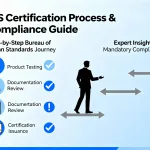
Step-by-Step BIS CRS Registration Process
-
Identify Applicable Standard
Determine the Indian Standard (IS) code applicable to your product category. -
Product Testing in BIS-Recognized Lab
Send product samples to a BIS-approved laboratory for testing according to the relevant standard. -
Submission of Application
Submit the online application on the BIS portal along with the required documents and the test report. -
Application Review by BIS Officials
BIS reviews the documents and may request clarifications or additional information. -
Grant of BIS CRS Registration Certificate
Once the application is verified and approved, BIS issues the Registration Number and Certificate of Registration. -
Use of CRS Mark
After certification, the manufacturer must display the CRS Mark and BIS Registration Number on the product and packaging.
Validity and Renewal of BIS CRS Registration
The BIS CRS Certificate is generally valid for two years.
Manufacturers can renew the registration before expiry, provided the product and manufacturing process remain unchanged. Renewal requires submission of updated documents and a declaration of continued compliance.
Products Under the BIS Compulsory Certification
It’s important to note that only certain products fall under mandatory BIS certification.
Products outside this list may still voluntarily obtain BIS certification to demonstrate quality and safety standards.
To check if your product is covered, you can refer to the latest product list under Schedule II of the BIS CRS Scheme available on the BIS website.
Penalties for Non-Compliance
Selling or distributing unregistered electronic products in India violates the BIS Act, 2016 and may lead to:
-
Heavy fines
-
Product seizure
-
Cancellation of business license
-
Blacklisting from future registration
Hence, it is essential for manufacturers and importers to obtain BIS CRS certification before entering the Indian market.
How to Get BIS CRS Certification in India
To get BIS CRS certification, manufacturers (domestic or foreign) can either:
-
Apply directly through the BIS online portal, or
-
Engage a BIS registration consultant in India for professional assistance with documentation, testing, and liaison with BIS officials.
Consultants help streamline the registration process, ensuring all technical requirements and testing procedures are correctly followed.
BIS Certification Benefits
The following advantages are offered by the BIS registration:
- Ensures high levels of quality because goods with a BIS registration must be produced in accordance with specified rules.
- Ensures the durability and good performance of BIS-certified items by providing authenticity
- Products that are BIS-certified reduce environmental concerns since BIS has set standards that forbid the use of specific chemicals and materials.
- After evaluating product samples in BIS-established laboratories, which guarantees quality control and high-quality products, BIS registration is issued.
Why India BIS Certification Matters for Manufacturers
For manufacturers—whether small, medium, or large—BIS certification is more than just legal compliance. It is a pathway to market trust, higher sales, fewer product failures, and long-term business growth. When companies ask what will be the India BIS certification, they are essentially asking how they can legally sell, grow, and protect their brand in the Indian market.
The biggest benefit of BIS certification is market access. Many products cannot be sold in India without a BIS licence. From electronics to steel and toys to home appliances, businesses simply cannot enter the market unless they meet BIS requirements. For domestic manufacturers, BIS certification boosts credibility. For foreign companies, it acts as a passport to enter one of the world’s fastest-growing consumer markets.
Another important benefit is consumer trust. Products that carry the ISI mark or CRS number immediately signal quality. Customers are far more likely to buy a product with BIS certification than one without it. In competitive markets like electronics, the BIS mark can significantly influence purchasing decisions.
BIS certification also reduces product failure rates. Since all certified goods undergo factory audits, laboratory testing, and strict compliance checks, manufacturers are required to maintain consistent quality. This leads to fewer customer complaints, fewer returns, and longer-lasting products.
Manufacturers also benefit from legal protection. With BIS certification, companies can defend themselves in case of disputes, because the product already meets national safety standards. Without certification, a company may be subject to lawsuits, penalties, and product bans.
Another major advantage is export readiness. BIS-certified products are viewed as more reliable in global markets. Many international buyers prefer Indian suppliers who follow strict quality controls. For foreign manufacturers, BIS certification assures Indian consumers that their imported products are safe and reliable.
Additionally, BIS certification promotes competitiveness. Companies with certified products often outperform uncertified competitors, win more tenders, and secure government contracts that require mandatory compliance.
Finally, BIS certification helps manufacturers align with sustainability and environmental guidelines. Many new standards now include energy efficiency requirements, eco-friendly materials, and reduced emissions standards—supporting India’s green initiatives.
Who Needs India BIS Certification?
A common question businesses ask is: Who is required to have BIS certification? The answer is simple—any manufacturer producing or importing goods listed as mandatory under BIS regulations must obtain approval before selling them in the Indian market.
1. Domestic Manufacturers
Indian companies producing goods under mandatory categories must apply for either ISI, CRS, FMCS, or Hallmarking. These include:
- Electronics
- Steel products
- Cement
- Household appliances
- Pressure cookers
- Toys
- Batteries
- LED lights
Domestic factories must allow BIS officials to inspect their facilities, test samples, and verify manufacturing processes.
2. Foreign Manufacturers
Companies located outside India must apply through the Foreign Manufacturers Certification Scheme (FMCS). Imported goods cannot be cleared by customs unless they carry a valid BIS licence. This applies to:
- LED TVs
- CCTV cameras
- Chemicals
- Automotive components
- Electrical appliances
- Toys
- Kitchenware
Foreign companies must appoint an Authorised Indian Representative (AIR) to coordinate with BIS.
3. Importers
Importers must ensure the foreign manufacturer has a valid BIS licence. Products arriving without certification risk:
- Seizure at ports
- Customs delays
- Penalties
- Denial of market entry
4. E-commerce Sellers
Platforms such as Amazon, Flipkart, and Tata Cliq require sellers to provide BIS certification for mandatory products before listing. Non-compliant listings may be removed.
5. Brand Owners & Private Labels
Anyone selling products under their own brand—even if they don’t manufacture them—must ensure their OEM holds BIS approval.
6. Manufacturers of Gold & Silver Jewellery
Jewellers must obtain a BIS hallmark licence to legally sell precious metals.
Types of BIS Certification Schemes in India
India uses multiple certification schemes under the Bureau of Indian Standards to regulate different kinds of products. When companies explore what will be the India BIS certification landscape, they often realize that there is no “one-size-fits-all” approach. Instead, BIS has developed specific schemes tailored to the nature of the product, how it is manufactured, and its intended use. These schemes ensure that every product—whether made in India or imported—meets the safety and performance expectations of Indian consumers.
The four major schemes under BIS are:
- ISI Mark Scheme
- Compulsory Registration Scheme (CRS)
- Foreign Manufacturers Certification Scheme (FMCS)
- BIS Hallmarking
Each scheme has a different purpose and regulatory requirement. Understanding how they differ is important for both domestic and international manufacturers planning to introduce their products in India.
The ISI Mark Scheme applies to products where quality and safety can pose a significant risk. This includes cement, electrical appliances, steel bars, pressure cookers, and other industrial and household items. The ISI scheme involves strict factory inspections, product testing, and continuous surveillance.
The CRS scheme focuses mainly on electronics and IT equipment. Products like LED TVs, smartphones, power banks, laptops, and adapters must be registered under this scheme. CRS is less complex compared to ISI but still requires product testing from BIS-recognised laboratories.
For foreign companies, the FMCS scheme ensures that imported goods comply with Indian Standards before entering the Indian market. Many overseas factories must undergo audits to receive BIS approval.
Finally, Hallmarking is mandatory for gold and silver jewellery. BIS hallmarking guarantees the purity and authenticity of precious metals sold across India.
All these schemes work together to ensure that goods sold in India are safe, reliable, and genuinely compliant with the country’s regulatory expectations.
ISI Mark Certification Overview
The ISI Mark is one of the most respected quality marks in India. When buyers see the ISI symbol on a product, they instantly associate it with safety, durability, and compliance. But behind this symbol lies a comprehensive certification process that manufacturers must follow.
1. What the ISI Mark Stands For
ISI stands for “Indian Standards Institution,” the original name of BIS when it was first established. The ISI mark is compulsory for over 370 products, ranging from electrical goods to building materials. These products pose a higher level of hazard or require strict performance assurance, which is why BIS enforces mandatory ISI certification on them.
2. Products Under ISI Certification
Some examples include:
- Cement
- Electric irons
- Room heaters
- Helmets
- Steel bars
- Pressure cookers
- LPG valves
- PVC pipes
These are considered critical products where quality failure can lead to accidents, financial losses, or health risks.
3. ISI Certification Process
Manufacturers must:
- Submit a detailed application
- Provide technical documents
- Send product samples to a BIS-approved laboratory
- Undergo a factory inspection
- Implement quality control systems
- Wait for BIS evaluation and approval
Once certified, the manufacturer receives a licence to use the ISI mark. However, this licence is not permanent—it requires continuous surveillance, sample testing, and annual renewals.
4. Importance of ISI Certification
ISI certification:
- Builds strong consumer trust
- Prevents product failures and returns
- Enhances brand reputation
- Ensures legal compliance
- Improves market competitiveness
It is one of the most powerful ways manufacturers can demonstrate their commitment to quality and safety.
Compulsory Registration Scheme (CRS) Requirements
The CRS scheme was introduced by the Ministry of Electronics & IT to reduce unsafe and poor-quality electronic products in the Indian market. Today, more than 80 electronic and IT products are listed under the CRS scheme.
1. Why CRS Matters
Electronics are highly sensitive products. Poor quality chargers may explode, substandard LED lights may cause fire, and faulty laptops or tablets can pose serious risks. CRS ensures these products are thoroughly tested before being sold.
2. Products Under CRS
- LED TVs
- Smartphones
- Power banks
- Laptops & tablets
- Wireless microphones
- CCTV cameras
- Smart watches
- Printers and scanners
More products continue to be added each year.
3. CRS Registration Process
The CRS registration process includes:
- Testing the product at a BIS-recognised lab
- Submitting test reports
- Filling out an online application
- Uploading required documents
- Receiving a Registration Number (R-number)
CRS is typically easier than ISI because it does not require a factory audit. However, the responsibility for compliance lies entirely with the manufacturer.
4. Benefits of CRS Certification
- Allows legal sale in India
- Builds market confidence
- Reduces import delays
- Ensures product safety
- Protects consumers from electrical hazards
CRS registration is essential for any company dealing with electronics in India.
Foreign Manufacturers Certification Scheme (FMCS)
The FMCS scheme ensures that foreign manufacturers follow the same quality guidelines as Indian producers. Before any regulated product can enter India, it must be certified under FMCS.
1. Key Features of FMCS
- Mandatory factory audits
- Sampling and testing of products
- Appointment of an Authorised Indian Representative
- Continuous surveillance after certification
Foreign companies must comply with the same standards and laws as domestic manufacturers.
2. Why FMCS Is Important
FMCS prevents the entry of low-quality and unsafe foreign products. It protects Indian consumers and ensures that imported goods do not harm local industries by undercutting them with poor-quality offerings.
3. Industries Using FMCS
- Electronics
- Steel manufacturing
- Household appliances
- Chemicals
- Automotive components
4. The Challenge for Foreign Manufacturers
FMCS is more complex than CRS or ISI. The factory inspection requires careful preparation, and many overseas companies need BIS consultants to guide them through documentation, compliance, and technical requirements.
BIS Hallmarking Requirements for Gold & Silver
Gold and silver jewellery must be hallmarked under BIS regulations. This ensures purity and prevents fraud—an essential step in a country where millions buy precious metals every year.
1. What Hallmarking Includes
- Purity grade
- BIS logo
- Jeweller’s identification
- Assaying centre identification
- Year of marking
2. Who Needs Hallmarking?
- Jewellery manufacturers
- Retail jewellers
- Wholesalers
- Exporters and importers
3. Why Hallmarking Matters
Hallmarking ensures customers receive genuine, pure jewellery. It also prevents unfair pricing, fraud, and misrepresentation of gold purity.
What Will Be the India BIS Certification Process?
The BIS certification process in India is detailed, structured, and designed to evaluate every important aspect of product safety. When people ask what will be the India BIS certification process, they usually expect a simple workflow, but the reality is far more comprehensive. BIS ensures that a product is safe not only at one point in time but throughout its entire manufacturing lifecycle. The certification process—whether for ISI, CRS, or FMCS—follows a strong and well-tested framework.
The process begins with identifying the correct Indian Standard (IS) for the product. Every product listed under the mandatory scheme must comply with a specific standard that outlines technical requirements, testing protocols, performance expectations, and safety parameters. Selecting the wrong standard can delay approvals, so manufacturers must verify the correct IS code during the initial stage.
Once the standard is confirmed, manufacturers prepare their technical documents. This includes factory details, quality management systems, product specifications, machinery lists, manufacturing flowcharts, and internal testing facilities. BIS requires proof that the manufacturer has a stable production process and the ability to maintain consistent product quality.
Next, the product samples are sent to a BIS-recognised laboratory. These labs test the samples according to the Indian Standards and provide detailed test reports. The testing stage is often the most critical because BIS bases its approval on test results. If the sample fails even one parameter, the manufacturer must correct the issue and submit new samples.
For ISI and FMCS schemes, BIS officers conduct a factory audit, which involves inspecting production lines, quality control systems, raw material records, calibration certificates, and testing equipment. The audit ensures the manufacturer can consistently produce products that meet the required standards.
Once the audit and testing stages are completed, BIS reviews all documents, verifies compliance, and finally issues the certification licence. This licence permits the manufacturer to affix the BIS mark (ISI, CRS, or FMCS) on their products.
Importantly, certification is not a one-time event. BIS continues monitoring certified products through market surveillance, random sampling, and periodic factory audits. If a manufacturer violates compliance, BIS has the power to suspend or cancel the certificate.
This detailed and rigorous process ensures that only genuinely safe and high-quality products reach Indian consumers.
Application Preparation & Documentation
The first major step in the BIS certification process is document preparation. This stage often determines the success or failure of the entire application. BIS requires a precise set of documents to evaluate the manufacturer’s capability, legal compliance, and technical stability.
1. Basic Company Documents
These include:
- Business registration certificate
- Manufacturing licence
- Factory address proof
- Legal identity documents
- Authorised signatory documents
These documents establish who owns the factory, where it operates, and who is responsible for compliance.
2. Technical Documents
Manufacturers must submit:
- Product specification sheets
- Manufacturing process flowcharts
- Raw material lists
- Machinery and equipment details
- Quality testing protocols
- Calibration certificates
Technical documents allow BIS to assess whether the factory has the capability to meet required standards.
3. Quality Management System Documents
These include:
- ISO certificates (if applicable)
- Quality control manuals
- Internal inspection records
- Process control documents
These documents demonstrate that the manufacturer follows systematic procedures to maintain product quality.
4. Product Samples & Test Reports
Manufacturers must send product samples to BIS-approved labs. The test reports must be uploaded with the application. Without successful test results, no BIS certification can be granted.
5. Additional Documents for Foreign Manufacturers
Foreign companies must also provide:
- Authorised Indian Representative (AIR) documents
- Affidavits
- Undertakings
- Factory photographs
- Local office contact details
Preparing the documents correctly helps avoid delays, rejections, or resubmissions.
Factory Audit & Sample Testing
Factory audits and sample testing are the backbone of BIS certification. These ensure that the quality claimed in documents is actually implemented in real production.
1. Factory Audit Requirements
During the audit, BIS officials check:
- Raw material storage
- Production lines
- Packaging systems
- Quality control laboratories
- Testing equipment calibration
- Worker training and qualifications
- Safety and environmental compliance
Auditors also verify whether the manufacturer uses the same materials and processes as described in the documentation.
2. Sample Testing
Sample testing takes place in BIS-recognized laboratories. These labs perform detailed checks such as:
- Electrical safety
- Mechanical testing
- Chemical analysis
- Durability tests
- Performance efficiency
- Safety parameters
The test reports must match all requirements under the relevant Indian Standard.
3. Common Reasons for Testing Failure
- Use of low-quality raw materials
- Inconsistent manufacturing processes
- Poor calibration of testing equipment
- Missing safety features
- Incorrect product design
Manufacturers must address these issues before resubmitting samples.
Grant of License & Certification
When all steps—documentation, sample testing, and factory audit—are complete, BIS moves to the final stage: granting the certification license.
1. BIS Review Process
BIS reviews:
- Test reports
- Audit findings
- Application documents
- Technical details
- Compliance records
If everything meets the required standards, BIS issues the licence.
2. Certification Validity
Generally:
- ISI licenses are valid for 1–2 years
- CRS registrations are valid for 2 years
- FMCS licenses require continuous surveillance
3. Post-Certification Responsibilities
Manufacturers must:
- Maintain consistent quality
- Allow BIS surveillance audits
- Renew licenses before expiry
- Use the BIS mark correctly
- Avoid misleading or fraudulent labelling
BIS certification is a continuous responsibility, not a one-time approval.
Why Manufacturers Must Prioritize Product Quality for BIS Approval
BIS certification is not just a regulatory formality—it is a strict quality assurance gateway. Many manufacturers underestimate the level of scrutiny BIS applies during product testing. In reality, product quality determines approval speed, certification cost, and long-term market success.
BIS approval requires your product to meet the exact parameters defined under the relevant Indian Standard. These standards cover structural integrity, electrical safety, material composition, performance benchmarks, endurance, hygiene, mechanical strength, and user safety. Even a small deviation—like incorrect wire gauge, poor plastic composition, or unstable software version—can result in sample failure.
Manufacturers who prioritize quality from the design stage save time and money during certification. Pre-compliance testing, internal audits, and routine factory inspections help identify issues before the BIS lab highlights them. High-quality components reduce the risk of re-testing, while product consistency ensures you pass the surveillance audits that come after license approval.
Placing quality at the heart of your production cycle not only secures a BIS license—it strengthens your brand reputation, reduces customer complaints, and improves long-term market competitiveness.
What Happens During the BIS Application Review (Step-by-Step Breakdown)
After submitting your application on the BIS portal, the review process follows a structured workflow. First, BIS officials cross-verify your documents to ensure compliance with the required standards. They review your manufacturing setup details, registered address, test reports, factory maps, quality control documents, and legal certifications.
Next, BIS evaluates the test report you uploaded from a BIS-recognized laboratory. The report must be complete, accurate, and within the validity period. If the report has inconsistencies, missing data, wrong model numbers, or incorrect product photos, the application will be placed on hold.
If everything is in order, BIS assigns your case to an officer for deeper scrutiny. The officer may request clarifications, additional documents, or revised information. Manufacturers must respond promptly to avoid delays. For domestic manufacturers, BIS may schedule a factory inspection, where officials verify quality processes and production capabilities. For foreign manufacturers under FMCS, a mandatory inspection is always required.
Once the officer is satisfied, the application moves to the approval stage. The system generates a draft license, fee details, and inspection report summary. After final verification, BIS issues the certificate digitally on the portal. The approval timeline depends largely on the quality of your documents, responsiveness, and product compliance.
The Role of BIS Standards in Shaping India’s Safety Ecosystem
BIS standards play a critical role in protecting Indian consumers from substandard and unsafe products. These standards are not arbitrary—they are developed through years of research, industry consultations, technical data, and global best practices. Their purpose is to create uniformity, ensure safety, and promote quality improvement in every manufacturing sector.
Whether it’s electrical appliances, cement, electronics, steel, toys, chemicals, or food products, BIS standards define the minimum safety and quality expected. They help manufacturers maintain consistent production quality, reduce product failures, and prevent accidents. For example, electrical product standards reduce fire risk, toy standards ensure child safety, and food standards protect public health.
These standards also raise India’s manufacturing competitiveness by aligning with global benchmarks. Exporters benefit from producing goods that meet internationally recognized specifications. Manufacturers gain trust, credibility, and market acceptance.
By enforcing these standards through mandatory product certifications, BIS ensures that products entering the Indian market meet the essential safety thresholds. This improves consumer confidence and strengthens India’s overall safety ecosystem.
Challenges Manufacturers Face While Applying for BIS Certification
While BIS certification offers immense advantages, the process can also be challenging for manufacturers—especially first-timers. The most common hurdle is understanding the correct Indian Standard applicable to their product. Misidentification leads to rejection or re-testing.
Documentation is another challenge. BIS requires extensive paperwork, including factory details, quality manuals, test reports, authorization letters, identity proofs, and technical specifications. Missing or incorrectly formatted documents can lead to delays.
For electronics and IT products under CRS, manufacturers often face trouble during product testing. BIS labs follow strict protocols, and even a minor flaw can result in test failure. The testing process can also take weeks, depending on lab workload and product complexity.
Foreign manufacturers (FMCS) face additional challenges, such as coordinating with Indian agents, managing factory inspections, and dealing with language barriers. For domestic manufacturers, factory preparedness can be a challenge if the production unit lacks proper quality control systems.
Finally, navigating the BIS portal can be confusing without guidance. This is where hiring a BIS consultant can significantly simplify the process.
What Separates Successful BIS Applications from Failed Ones
Successful BIS applications share common characteristics: accurate documents, proper testing, and strong quality control. The manufacturers who secure approvals quickly are those who prepare thoroughly before filing.
They begin by identifying the correct Indian Standard, studying its requirements, and ensuring their product specifications align. They conduct pre-testing to identify issues early. When they send samples for BIS testing, they submit them in perfect working condition with all necessary accessories and user manuals.
Their documents are perfectly formatted, correctly signed, and contain consistent details across all forms. They respond promptly to BIS queries and maintain transparency about their manufacturing setup.
In contrast, failed applications typically involve inconsistent data, unprepared factories, poor-quality samples, expired test reports, or incorrect product categories. Many applications fail because manufacturers rush without understanding compliance expectations.
A BIS consultant helps bridge these gaps by ensuring everything is perfectly aligned from the start.
Factory Inspection: What BIS Inspectors Look For
A BIS factory inspection is a crucial stage for manufacturers applying under schemes like ISI and FMCS. During this visit, BIS officials verify whether the manufacturing unit can consistently produce goods that meet the standard’s requirements. The inspection is rigorous and highly detailed because BIS aims to ensure long-term compliance, not just one-time sample quality.
Inspectors begin by reviewing the factory layout, checking machinery, production lines, testing equipment, and storage areas. They also verify calibration certificates for testing instruments to ensure accuracy. Next, they examine the quality control processes—how raw materials are inspected, how semi-finished goods are checked, and how the final product is tested before dispatch.
Another key area of focus is in-house testing, where inspectors ensure that manufacturers can perform routine quality checks independently. They check the competence of the staff, availability of SOPs (Standard Operating Procedures), batch records, and internal audit reports.
Documentation is equally important. Inspectors look for compliance manuals, product specifications, and testing logs. After completing the inspection, officials prepare an inspection report which directly influences licensing decisions. Any gaps must be rectified immediately, or the approval may be delayed or denied.
Understanding the Significance of Raw Material Quality in BIS Compliance
Raw materials form the foundation of every product, and their quality directly affects BIS compliance. Even if your product design is perfect, poor-quality raw materials can cause test failures, performance issues, and safety risks. BIS emphasizes raw material inspection because it ensures reliability throughout the production lifecycle.
Manufacturers must source materials from reliable suppliers who meet recognized standards. For example, electrical products require specific-grade copper, plastics must meet fire resistance standards, and steel must conform to specific tensile strength limits. Bis-approved vendors or pre-tested materials provide a major advantage during the certification process.
Raw material traceability is also important. Manufacturers must maintain purchase invoices, quality certificates, test results, and supplier evaluation records. During inspections, BIS officials review this documentation to confirm supply-chain transparency.
Investing in high-quality raw materials improves durability, reduces rejections, and ensures compliance with Indian Standards—ultimately increasing product acceptance and customer trust.
BIS Certification for Imported Products: Special Guidelines for Foreign Brands
Foreign manufacturers who export products to India must obtain BIS certification before launching their goods in the market. Unlike domestic applicants, foreign brands must apply through the Foreign Manufacturers Certification Scheme (FMCS) or Compulsory Registration Scheme (CRS), depending on the product category.
For FMCS, the process includes mandatory factory inspection by BIS officers who travel to the foreign manufacturing location. The brand must also appoint an Authorized Indian Representative (AIR) who is responsible for compliance, coordination, and communication with BIS. Without an AIR, foreign entities cannot apply.
Imported products must undergo testing at a BIS-recognized lab in India. Samples must be couriered, cleared through customs, and submitted to the lab with complete documentation. The manufacturer must ensure that their product matches the model, specifications, and markings tested at the lab.
Foreign brands often face challenges such as documentation translation, shipment delays, high inspection costs, and coordination issues. This is why most of them hire BIS consultants in India to manage the process smoothly and avoid compliance risks.
Why BIS Frequently Updates Standards and Testing Requirements
Many manufacturers wonder why BIS keeps updating its standards and why testing requirements change over time. These updates are not arbitrary—they’re driven by technological advancements, safety findings, global regulatory changes, and consumer protection needs.
For instance, the electronics industry evolves rapidly, and outdated standards may not address modern risks like cyber vulnerabilities, overheating, or lithium-ion battery hazards. Likewise, toy standards are updated frequently to eliminate harmful chemicals, choking hazards, and unsafe designs.
BIS also updates standards to align with global benchmarks such as ISO, IEC, and ASTM. This helps Indian manufacturers compete internationally and ensures imported products meet India’s safety expectations.
Manufacturers must stay aware of standard revisions to avoid compliance lapses. When a standard is updated, existing license holders must transition within the deadline; failing to do so may result in suspension or cancellation of their BIS license.
Documentation Mistakes That Commonly Delay BIS License Approval
Missing, incomplete, or incorrect documentation is the top reason why BIS applications are delayed. Even minor discrepancies—such as mismatched addresses, incorrect model names, or expired authorization letters—can push your application back by weeks or even months.
The most common documentation errors include:
- Submitting outdated test reports
- Inconsistent product specifications across documents
- Missing factory registration papers
- Incorrectly formatted affidavits or declarations
- Absence of calibration reports for equipment
- Lack of technical drawings or product photographs
- Wrong HS code or Indian Standard selection
To avoid these mistakes, manufacturers should prepare a complete documentation checklist and verify each document thoroughly. BIS consultants ensure that paperwork is accurate, consistent, and compliant with BIS formats, preventing unnecessary delays.
Why Selecting the Correct Indian Standard (IS) Code Matters for BIS Certification
One of the most overlooked yet critical steps in BIS certification is choosing the correct Indian Standard (IS) code for your product. Each product category—electronics, construction materials, chemicals, appliances, textiles, or metals—has a specific standard that outlines the safety, performance, and testing requirements. Selecting the wrong IS code can lead to application rejection, test failure, or even non-compliance penalties.
Every Indian Standard includes detailed technical criteria such as material composition, tolerance limits, efficiency parameters, environmental resistance, and safety guidelines. When the IS code does not match the actual product, the lab tests become irrelevant, and BIS cannot approve the product. This results in delays, wasted testing costs, and resubmissions.
For example, LED lights fall under IS 16102 or IS 10322 depending on the type. Steel bars may fall under IS 1786, but galvanized steel sheets may fall under a different standard entirely. These distinctions matter because each product is evaluated differently. If a manufacturer misunderstands these classifications, the entire application process may be jeopardized.
Expert consultants help identify the correct standard through product analysis, technical drawings, and regulatory assessments. This ensures smooth testing, faster licensing, and complete compliance.
How BIS Certification Improves Market Competitiveness and Consumer Trust
BIS certification is not just a legal requirement—it’s a powerful quality assurance tool that enhances a brand’s visibility and credibility. In competitive markets like India, where consumers increasingly prioritize safety and reliability, BIS-certified products stand out immediately.
Certified products carry the trusted ISI Mark or BIS CRS mark, which signals that the product has passed rigorous testing at government-recognized labs. This builds instant confidence among buyers, distributors, wholesalers, and retailers. Many large retailers even refuse to stock non-certified products, especially in electronics, appliances, toys, and construction materials.
Manufacturers also benefit from fewer customer complaints, reduced product returns, and lower warranty costs due to higher product quality. Additionally, government tenders and institutional buyers frequently prefer or require BIS-certified goods.
International brands entering India gain a competitive edge when they display BIS certification, as it demonstrates their willingness to meet Indian safety standards. Overall, BIS boosts brand reputation, consumer trust, and sales performance across industries.
Importance of Product Labeling and Marking Requirements for BIS Compliance
Accurate labeling plays a major role in BIS compliance. Products that pass testing and receive certification must follow strict marking rules, including displaying the ISI mark, license number, manufacturing details, safety warnings, and model identification.
Incorrect labeling—such as missing batch numbers, incorrect ISI mark format, or incomplete manufacturer details—can lead to non-compliance, penalties, or product bans. BIS also verifies that the markings are durable, readable, and aligned with the applicable standard.
For electronics under CRS, digital marking is also allowed, but physical labeling is still mandatory. Products like toys, helmets, and appliances require additional warnings or usage instructions. Manufacturers must ensure consistency between labeling and the details provided in test reports and application forms. Any mismatch triggers compliance issues.
Proper labeling ensures traceability, consumer awareness, and regulatory transparency, all of which contribute to a safer marketplace.
The Role of Authorized Indian Representative (AIR) for Foreign Manufacturers
Foreign companies applying for BIS certification must appoint an Authorized Indian Representative (AIR), who acts as a legal and operational liaison with BIS. The AIR is responsible for ensuring compliance, handling documentation, coordinating testing, receiving communications, and managing any regulatory issues that arise.
The AIR must be an Indian citizen or an Indian-registered entity. They represent the foreign manufacturer in all matters related to audits, inspections, renewals, and surveillance activities. BIS holds the AIR accountable if the foreign manufacturer violates any compliance rules.
Because the AIR carries significant responsibility, foreign brands must choose wisely. Many rely on experienced BIS consulting firms to act as their AIR, ensuring smooth certification without legal risk.
The Cost Structure of BIS Certification: What Manufacturers Should Expect
The cost of BIS certification varies based on factors like product category, testing requirements, the number of models, and whether the applicant is domestic or foreign. Typical components of the cost structure include:
- BIS application fee
- Testing fees at a BIS-recognized laboratory
- Factory inspection fees (mandatory under FMCS)
- Audit travel expenses for foreign manufacturers
- License fees and marking fees
- Consultant charges (optional but common)
Testing constitutes the highest portion of expenses. Complex products like electronics, chemicals, and metals undergo extensive evaluations that may require specialized equipment. Foreign manufacturers must also cover international inspection costs, which can be significant.
Understanding the cost breakdown helps companies budget effectively and avoid unexpected expenses. When properly planned, BIS certification becomes a smooth and manageable investment.
Renewal of BIS Certification: Process, Timeline, and Best Practices
BIS certification is not permanent; it must be renewed periodically to ensure that manufacturers continue to meet quality and safety standards. The renewal frequency varies by scheme—CRS licenses are usually valid for 2 years, while ISI and FMCS licenses may range from 1 to 2 years, depending on compliance performance and marking fees.
The renewal process begins with submitting an application through the BIS portal, accompanied by an updated set of compliance documents. Manufacturers must include recent test reports, production data, proof of consistent quality control, and evidence of batch marking. If BIS identifies any product revisions or process changes, additional testing may be required.
Timely renewal is vital. Manufacturers are encouraged to begin the process at least 3 months before license expiry to avoid any gaps in validity. If a license lapses, the manufacturer must halt production, sales, and distribution until reinstatement—which could take several weeks or even months.
Best practices for smooth renewal include maintaining all testing instruments, keeping calibration certificates up to date, conducting internal audits, and ensuring accurate labeling. Manufacturers who consistently maintain compliance often receive faster renewals with fewer queries.
Common Reasons Why BIS Applications Get Rejected and How to Avoid Them
Despite careful planning, many businesses face BIS application rejections due to avoidable errors. Understanding these reasons helps manufacturers prepare better and reduce the risk of delays.
The most frequent causes of rejection include:
- Incorrect or incomplete documentation
- Mismatch between test reports and application details
- Poor product quality during sample testing
- Use of outdated or incorrect Indian Standards
- Failed or incomplete factory inspections
- Unqualified or uncalibrated testing equipment
- Inconsistent product labeling or missing details
- Lack of an Authorized Indian Representative (for foreign brands)
Sample failure is one of the biggest roadblocks. If the product doesn’t perform according to the Indian Standard, the manufacturer must improve the product, retest it, and reapply. This can be expensive and time-consuming.
To avoid these issues, manufacturers should perform pre-compliance testing, verify documentation thoroughly, and consult with experienced BIS professionals who understand the complexities of the certification landscape. Proper preparation significantly increases approval chances.
The Importance of Pre-Compliance Testing Before Submitting to BIS Labs
Pre-compliance testing is a proactive step that smart manufacturers take to ensure their products meet Indian Standards before submitting them to a BIS-recognized laboratory. This step reduces the risk of test failures and prevents costly delays.
During pre-compliance testing, engineers evaluate mechanical strength, electrical safety, thermal performance, chemical composition, and durability—depending on the product type. This helps identify early design flaws or weaknesses that might cause BIS testing failure.
Pre-testing can be conducted at internal quality labs or third-party testing centers. Although not mandatory, it gives manufacturers a strong advantage by revealing issues at an early stage. This way, corrections can be made without affecting the official certification timeline.
Additionally, pre-compliance testing improves the final product design, boosts consumer safety, and enhances reliability—building a stronger brand reputation.
How BIS Ensures Consumer Safety Across Industries
Consumer safety is the primary mission of BIS. The certification framework is designed to prevent hazardous, substandard, or counterfeit products from entering the Indian market. BIS plays an instrumental role in industries such as electronics, toys, steel, chemicals, food-grade materials, and construction equipment.
The organization uses a multi-layered approach:
- Mandatory standards for high-risk products
- Independent lab testing to verify product claims
- Routine surveillance to check compliance after certification
- Factory audits to ensure consistent quality during production
- Market sampling to detect non-compliant goods sold in stores
- Strict penalties for misuse of the ISI mark or CRS logo
These measures help prevent accidents, electrical hazards, structural failures, toxin exposure, and quality fraud. BIS also collaborates with global bodies to keep Indian standards updated and internationally aligned.
This commitment strengthens consumer confidence and supports manufacturers who prioritize safety and quality.
The Future of Digital Transformation in BIS Certification Processes
BIS has been rapidly modernizing its certification process to increase efficiency and transparency. Today, most procedures—from application submission to license generation—are handled online through the BIS Manak portal.
Upcoming digital transformations include:
- AI-powered compliance evaluation tools
- Integrated dashboards for real-time status tracking
- Blockchain-based product verification
- Digital ISI marking for tamper-proof identification
- Smart surveillance using IoT-based sampling signals
These innovations will simplify the certification workflow, reduce human errors, prevent counterfeit certifications, and improve the overall user experience for manufacturers. The shift toward complete digitization enhances transparency and boosts global investor confidence in the Indian regulatory system.
What Will Be the India BIS Certification Scenario in the Next 10 Years?
The future of what will be the India BIS certification over the next decade is expected to be more dynamic, robust, and technologically advanced. As India’s industrial sector expands and global trade intensifies, BIS will continue strengthening safety regulations, introducing more mandatory standards, and improving digital tools.
We can expect stricter enforcement, wider coverage of product categories, and faster processing times due to automation. More international brands will seek BIS certification to enter the booming Indian market, and domestic manufacturers will benefit from higher export potential as Indian standards align with global norms.
In the coming years, BIS will not just be a regulatory requirement—it will become a cornerstone of consumer protection, industrial growth, and global trust in Indian manufacturing.
How Startups and Small Manufacturers Can Benefit from BIS Certification
Startups and small-scale manufacturers often assume BIS certification is only for large industries. In reality, BIS approval can become one of the biggest competitive advantages for emerging businesses. When a new company enters the market, trust is the biggest challenge. Customers hesitate to try unfamiliar brands unless there is a strong assurance of quality and safety. This is where BIS certification becomes a game-changer.
For startups manufacturing electronics, household appliances, toys, construction materials, or industrial goods, BIS certification validates product reliability. It sends a clear message to consumers and distributors that the brand is serious about safety and compliance. Many online marketplaces, major retailers, and export buyers require BIS certification before listing products—giving certified startups direct access to bigger business opportunities.
Additionally, funding agencies and investors often evaluate compliance readiness before approving capital. A BIS-certified brand appears more responsible, mature, and market-ready, making it easier to attract investment. Certification also reduces legal risks, product returns, and warranty claims, helping small manufacturers save money over time.
By adopting BIS standards from the beginning, startups establish a strong foundation for growth, customer trust, and long-term sustainability.
Why Testing Laboratories Play a Crucial Role in BIS Certification Success
Approved, accredited laboratories form the backbone of the BIS certification ecosystem. These labs conduct rigorous testing as per Indian Standards, ensuring every product submitted for certification meets the technical, performance, and safety parameters outlined by BIS.
Because BIS does not rely on internal testing alone, external laboratories provide unbiased, independent verification. This builds consumer confidence and eliminates the possibility of manufacturers misrepresenting product quality.
Testing labs use specialized equipment, calibrated instruments, and controlled environments to perform electrical tests, mechanical endurance checks, chemical analysis, durability assessments, and safety evaluations. Their reports serve as the primary evidence BIS uses to make licensing decisions.
If a lab follows strict protocols and provides accurate results, manufacturers enjoy a smoother approval process. However, if the testing is inconsistent, incomplete, or poorly executed, the entire application may be delayed or rejected. This is why selecting a BIS-recognized, experienced laboratory is crucial.
As BIS standards evolve, labs continuously upgrade their equipment and capabilities, ensuring they remain aligned with global technological advancements.
How BIS Certification Supports “Make in India” and Boosts Exports
The “Make in India” initiative aims to transform India into a global manufacturing hub. BIS certification plays an important role in this mission by enhancing product quality, improving safety, and building trust among international buyers.
Many foreign markets require Indian manufacturers to demonstrate compliance with recognized safety and quality frameworks. BIS certification, being aligned with several international standards, helps Indian products gain acceptance in global markets.
Manufacturers who adopt BIS standards often find it easier to qualify for export certifications like CE, UL, FCC, and ISO. This alignment reduces the adaptation time needed for global approvals. Additionally, BIS ensures products manufactured in India are safe, reliable, and globally competitive—strengthening India’s reputation on the world stage.
By enforcing standardization, BIS helps the domestic manufacturing sector innovate, maintain consistent quality, and reduce product defects. This attracts multinational companies to source goods from India, boosts export volumes, and creates employment opportunities. In this way, BIS certification directly supports the national vision of industrial growth and global expansion.
The Relationship Between BIS, Quality Control Order (QCO), and Legal Compliance
BIS does not operate alone—it works closely with the Government of India to regulate product quality. One of the most important regulatory tools is the Quality Control Order (QCO), issued by various ministries. QCOs make BIS certification mandatory for specific products considered critical for public safety, health, infrastructure, or the environment.
When a product is included in a QCO, manufacturers must obtain BIS certification to legally produce, import, store, sell, or distribute it in India. Violating a QCO can lead to severe penalties, including fines, factory closure, product recall, and legal prosecution.
Industries such as steel, chemicals, electrical appliances, toys, cables, and pressure equipment frequently fall under QCOs. These industries require strict monitoring to protect consumers and prevent unsafe goods from entering the market.
Understanding QCO requirements helps businesses stay compliant and avoid legal consequences. Regular updates from BIS ensure that manufacturers are aware of new additions or revisions to the mandatory product list.
What Will Be the India BIS Certification Trend for Emerging Technologies?
The landscape of what will be the India BIS certification is expanding rapidly as new technologies emerge across industries. Over the next few years, BIS is expected to introduce new standards to cover innovative sectors such as:
- Smart home appliances
- Electric vehicle (EV) components
- Lithium-ion batteries and chargers
- Renewable energy equipment
- Robotics and automation devices
- IoT-enabled gadgets and wearables
- AI-driven consumer electronics
These technologies require specialized testing due to their complex electrical, thermal, and safety characteristics. As consumer adoption grows, BIS will tighten regulations to prevent accidents, overheating, cybersecurity risks, and malfunctioning devices.
Manufacturers investing in future-ready technologies must be prepared for more sophisticated compliance processes. This includes stronger quality control, advanced testing, and better product documentation.
The BIS of the future will not only evaluate traditional safety parameters but also digital risks, interoperability issues, and sustainability factors. This evolution ensures India remains technologically competitive while safeguarding the interests of consumers.
Challenges Faced by Manufacturers During BIS Certification and How to Overcome Them
While BIS certification offers immense benefits, the journey toward approval can be challenging for many manufacturers—especially those new to regulatory compliance. Understanding these challenges helps companies prepare better and avoid costly setbacks.
One of the biggest hurdles is technical complexity. Many manufacturers lack in-house expertise to interpret Indian Standards correctly. Each standard contains detailed parameters, testing protocols, and safety requirements that must be followed precisely. Misinterpreting even a small clause can result in test failure or application rejection.
Another challenge is sample failure at BIS-recognized labs. If a product does not meet performance or safety norms, the manufacturer must modify the design, improve raw materials, or refine production processes. This leads to additional testing costs, time delays, and uncertainty.
Documentation errors also create roadblocks—missing declarations, incorrect model details, mismatched specifications, or incomplete technical data often lead to queries or rejection. Manufacturers unfamiliar with the BIS portal also struggle with digital submission issues.
Factory inspections under FMCS can be intimidating. Inspectors check everything—from machinery maintenance to quality control systems. Any discrepancy in calibration records, internal audits, or SOPs can lead to non-compliance.
To overcome these challenges, companies should adopt a methodical approach:
- Perform pre-compliance testing before official submission
- Maintain organized documentation with updated certificates
- Train staff on quality management practices
- Work with a BIS consultant to avoid misinterpretation
- Implement continuous improvement in production processes
These strategies ensure a smoother certification journey and faster licensing.
How BIS Certification Supports Public Safety and National Standards Development
Public safety is the heart of the BIS certification ecosystem. Every rule, standard, and testing requirement exists to protect consumers from unsafe, defective, or harmful products. Over the years, BIS has played a vital role in reducing accidents, preventing electrical hazards, ensuring toy safety, improving food-grade materials, and strengthening construction quality across India.
BIS ensures public safety through:
- Mandatory certification for high-risk goods
- Rigorous lab testing using scientific methods
- Regular market surveillance and sampling
- Updates to Indian Standards based on global trends
- Collaboration with ministries, research institutes, and safety bodies
By continuously developing national standards, BIS supports innovation while ensuring safety. These standards act as technical benchmarks for manufacturers, importers, and regulators. They help maintain uniformity across industries and build a safer, more reliable marketplace for consumers.
The more manufacturers adopt BIS standards, the safer the environment becomes for end users—from children playing with toys to households using electrical appliances.
The Economic Impact of BIS Certification on Indian Industries
BIS certification does far more than regulate products—it influences the broader economic landscape. When industries comply with BIS standards, product quality improves dramatically. This leads to higher productivity, fewer defects, reduced wastage, and increased customer satisfaction.
Industries with strong compliance practices often experience:
- Lower rejection rates
- Better product lifecycle performance
- Improved export opportunities
- Higher brand loyalty
- Reduced warranty claims and after-sales expenses
A nation with stricter quality standards attracts more global investment. BIS certification reassures foreign companies that Indian manufacturers follow recognized safety and performance frameworks. This results in increased trade partnerships, joint ventures, and technology collaborations.
Additionally, BIS supports MSMEs by offering simplified procedures, online systems, and transparent evaluation methods. As more industries adopt certification, India’s manufacturing ecosystem becomes more competitive and efficient—boosting GDP growth and enhancing global positioning.
Case Studies: How Brands Benefited from BIS Certification
Many leading Indian and global brands have witnessed remarkable growth after obtaining BIS certification. These real-world examples show how powerful compliance can be.
Case Study 1: Electronics Manufacturer
A mid-size electronics company faced repeated product returns due to overheating issues. After participating in BIS certification, they redesigned their components according to the Indian Standard, conducted pre-testing, and implemented stricter quality control. Within a year, customer complaints dropped by 65%, and the brand gained listings in major retail chains.
Case Study 2: Toy Manufacturer
A toy manufacturer targeting export markets struggled to meet international safety norms. BIS certification helped them align with global standards, making their toys safer and more durable. Within two years, their sales grew by 40%, and they expanded into European and Middle Eastern markets.
Case Study 3: Steel Industry Brand
A steel manufacturer improved its chemical composition processes to comply with IS specifications. This opened the door to government tenders, infrastructure projects, and high-value contracts—boosting revenue significantly.
These cases prove that BIS certification is not just a regulatory formality—it’s a catalyst for growth, trust, and profitability.
Final Thoughts on What Will Be the India BIS Certification Landscape
The future of what will be the India BIS certification system is promising, innovative, and increasingly digital. With stricter enforcement, advanced testing technologies, and global alignment, BIS will continue shaping the quality landscape of Indian industries.
Manufacturers must stay prepared for evolving standards, adopt stronger quality systems, and embrace compliance as a long-term investment. As India’s economy grows, BIS certification will remain a cornerstone of trust—protecting consumers, supporting industries, and strengthening India’s global presence.
FAQs
1. Is BIS Certification Mandatory for All Products in India?
No, BIS certification is not mandatory for every product. It is compulsory only for products listed under the Mandatory Certification Scheme, FMCS, and the CRS Scheme. These categories include safety-critical items such as electrical appliances, construction materials, electronics, and pressure vessels. Manufacturers of products outside these lists may still choose BIS certification voluntarily to increase customer trust, strengthen market credibility, and improve product quality. A BIS Consultant can guide you on whether your product falls under mandatory or voluntary certification.
2. How Can I Check if My Product Requires BIS Certification?
You can determine BIS eligibility by checking the latest BIS mandatory product lists, reviewing Quality Control Orders (QCOs) issued by the Indian Government, or consulting with a BIS expert. Since the QCO list is frequently updated, it is important to verify the most recent requirements. A BIS Consultant helps evaluate product specifications, scope, classification, and testing requirements to ensure accurate compliance.
3. Is BIS Certification Required for Importing Products Into India?
Yes, products listed under mandatory BIS schemes must obtain certification before being imported into India. Customs authorities can seize or reject imported goods lacking the required BIS ISI Mark or CRS registration. Foreign manufacturers must apply through the Foreign Manufacturers Certification Scheme (FMCS), which includes factory audits and in-country testing. Importers should collaborate with a BIS Consultant to avoid delays, penalties, and shipment holds.
4. Can Foreign Manufacturers Obtain BIS Certification?
Absolutely. Non-Indian manufacturers can apply for BIS approval through the FMCS program. This scheme requires:
- A local Authorized Indian Representative (AIR)
- Product testing in BIS-recognized labs
- Factory inspections
- Compliance with Indian Standards (IS)
A BIS Consultant helps foreign companies manage documentation, AIR appointment, and end-to-end approval, ensuring faster certification.
5. How Long Does BIS Certification Remain Valid?
BIS ISI certificates are generally valid for two years, while CRS registrations under the Compulsory Registration Scheme are valid for two years and must be renewed before expiry. FMCS certificates may have different validity periods depending on compliance and audit results. Renewal requires recent test reports and updated compliance documents, and a consultant can help ensure uninterrupted validity.
6. What Happens if a Product Fails BIS Testing?
If your product fails BIS laboratory testing, you must:
- Identify the non-conformity
- Correct the defect at the manufacturing stage
- Re-submit the product for testing
Manufacturers may also require changes in design, raw materials, or safety features. A BIS Consultant offers technical support to troubleshoot failures and guide corrective actions for successful retesting.
7. Can BIS Certification Be Revoked or Suspended?
Yes, BIS can suspend or cancel your license if:
- Product quality deteriorates
- Standards are not followed
- Misuse of ISI/CRS mark occurs
- Mandatory audits failImproper labeling or false claims are detected
Suspension severely impacts product sales and market credibility. Working with a consultant ensures continuous compliance, timely monitoring, and proper use of the ISI Mark.
8. How Much Does BIS Certification Cost?
The overall cost depends on several factors:
- Product type
- Applicable Indian Standards
- Testing charges
- Factory audit fees (for ISI/FMCS)
- License fee + Marking Fee
- Consultant service fee
Costs may vary widely based on product category and complexity. A BIS Consultant can provide an upfront estimate and optimize expenses.
9. Do Online Sellers Need BIS Certification?
Yes. E-commerce platforms like Amazon, Flipkart, and Meesho require sellers to upload valid BIS certificates for regulated products—especially electronics, toys, LED items, and household appliances. Without BIS approval, listings may be suspended, removed, or blocked. Using a BIS Consultant ensures you meet platform requirements without compliance stress.
10. Can I Sell BIS Certified Products Internationally?
BIS certification is approved only for the Indian market, but it enhances overall product credibility. Many global distributors recognize BIS as a symbol of quality and safety. Although BIS certification alone does not replace international standards (like CE, UL, FCC), it strengthens your brand value and improves acceptance in global markets.
11. Is Factory Inspection Mandatory for All BIS Certifications?
Factory inspection is mandatory only for specific certification types like:
- ISI (Domestic Manufacturer License)
- FMCS (Foreign Manufacturer Certification Scheme)
For CRS registration, inspections are not required; only product testing is needed. BIS Consultants help manufacturers prepare for inspections by organizing documents, facility layouts, quality control records, and technical compliance.
12. What Is the Difference Between Self-Declaration and Third-Party Testing?
BIS certification does not allow self-declaration unless specified for limited categories. Most BIS schemes require testing from:
- BIS approved labs
- NABL accredited labs recognized under the scheme
Third-party testing ensures credibility, transparency, and safety. A BIS Consultant will guide you to the correct testing laboratory and manage the submission process.
13. Can I Use the ISI Mark Without Permission?
No. Unauthorized use of the ISI Mark is a punishable offense under the BIS Act, 2016. Penalties may include:
- Heavy fines
- Product seizure
- Business closure
- Legal action
Manufacturers must ensure they receive an approved license before printing or engraving the ISI Mark on products or packaging.
14. How Can a BIS Consultant Simplify My Certification Journey?
A BIS Consultant provides end-to-end support, including:
- Standard interpretation
- Documentation preparation
- Product classification
- Lab selection and testing coordination
- Application filing
- Follow-ups with BIS officials
- Factory audit support
- Renewal & post-certification compliance
They ensure faster approvals, fewer errors, minimal rejections, and smooth certification for manufacturers, importers, and foreign companies.
15. What Is the Role of a BIS Authorized Indian Representative (AIR)?
For foreign manufacturers applying for FMCS or CRS certification, BIS requires an Authorized Indian Representative (AIR). The AIR becomes legally responsible for:
- Coordinating with BIS officials
- Managing applications and submissions
- Handling product recalls or complaints
- Ensuring compliance and surveillance
- Being the legal contact within Indian jurisdiction
A BIS Consultant typically provides AIR support or helps appoint a compliant representative to streamline approvals.
16. Can I Apply for Multiple BIS Certifications for Different Products?
Yes. If you manufacture multiple products falling under different IS standards, you must apply for separate certifications. Each certification requires its own testing, documentation, and approval. A BIS Consultant helps identify whether products fall under the same IS standard or require individual certificates.
17. What Are Quality Control Orders (QCOs)?
QCOs are official notifications issued by the Government of India mandating BIS certification for specific products. Once a product is included under a QCO, it becomes illegal to manufacture, sell, or import it without BIS certification. QCOs are issued to ensure public safety, product reliability, and quality benchmarking.
18. Do BIS Standards Change Over Time?
Yes, BIS periodically updates standards to match technological advancements, safety requirements, and global benchmarks. Manufacturers must stay updated and ensure that products meet the latest standard versions. A BIS Consultant can alert you when a standard revision affects your existing license.
19. What Is the Difference Between ISI and BEE Certifications?
- ISI ensures product safety and compliance with Indian Standards.
- BEE focuses on energy efficiency for appliances like ACs, refrigerators, motors, and lighting.
Some products may require both certifications. Consultants help reduce duplication and ensure proper labeling.
20. Does BIS Allow Online Application Filing?
Yes. BIS has an online portal for ISI, CRS, and FMCS applications. Although the portal handles submissions digitally, the process requires expertise in testing, documentation, product categorization, and submissions. A consultant helps avoid file rejections due to incomplete data.
21. Is a BIS Factory Inspection Difficult?
Factory inspections can be complex, especially for manufacturers unfamiliar with BIS regulations. Inspectors check:
- Manufacturing processes
- Quality control systems
- Testing facilities
- Raw material sources
- Finished product testing records
Consultants prepare manufacturers with mock audits and guidance to ensure successful inspections.
22. What Is the Turnaround Time for FMCS Certification?
FMCS certification may take 4 to 6 months, depending on:
- Factory audit scheduling
- Shipment of samples
- Testing timelines
- BIS review and approval
Proper documentation and pre-inspection preparation can reduce delays.
23. Are Test Reports from Foreign Labs Accepted by BIS?
No. BIS accepts only test reports from BIS-recognized or BIS-approved Indian laboratories, depending on the scheme. Foreign lab reports are not valid for certification.
24. What Are the Responsibilities of BIS License Holders?
Licensed manufacturers must:
- Maintain product quality
- Follow relevant Indian Standards
- Ensure correct marking on every unit
- Submit periodic test reports
- Cooperate during surveillance audits
Non-compliance can lead to suspension or cancellation.
25. Is Renewal Required After BIS Certification?
Yes. All BIS certifications must be renewed before expiry. Renewal requires:
- Updated test reports
- Updated documentation
- Fee payment
- Continued compliance verification
Consultants ensure timely renewals to avoid interruptions.
26. What Is the Penalty for Selling Non-Certified Products Under Mandatory BIS?
Penalties may include:
- Heavy fines
- Seizure of goods
- Business closure
- Up to 2 years imprisonment under BIS Act, 2016
The government actively enforces compliance for safety-critical products.
27. Can I Transfer My BIS Certification to Another Manufacturer?
No. BIS certification is non-transferable. If manufacturing shifts to a new location or new entity, a fresh application is required.
28. How Many Indian Standards Exist in BIS?
BIS has over 21,000+ Indian Standards covering all major industries including electronics, construction materials, chemicals, textiles, and household goods.
29. Can BIS Certification Be Obtained Without Testing?
No. Testing is mandatory for all products requiring BIS certification, except for categories where BIS explicitly allows self-declaration. Testing ensures product reliability and safety.
30. Does BIS Certification Increase Market Value?
Yes. Products with ISI or CRS certification demonstrate higher trustworthiness. Retailers, distributors, government institutions, and e-commerce platforms prefer BIS-certified goods, boosting market demand.
31. Do Startups Need BIS Certification?
Yes, if the product falls under the mandatory certification list. BIS does not exempt startups, MSMEs, or new manufacturers from compliance.
32. Can BIS Inspect My Facility Without Notice?
Yes. BIS can conduct surprise inspections to verify compliance, investigate complaints, or review production quality.
33. What Documents Are Required for FMCS Certification?
Key documents include:
- Factory license
- Process flow chart
- Technical drawings
- Raw material list
- Quality assurance manual
- Authorized Indian Representative documents
A consultant helps in compiling and organizing these documents professionally.
34. Can BIS Testing Be Expedited?
Some labs offer priority testing depending on workload, but BIS does not guarantee expedited approval. However, consultants can help optimize the testing sequence to save time.
35. Is BIS Certification Mandatory for Toys?
Yes, BIS ISI certification is mandatory for all toys—domestic and imported. This regulation applies to both electronic and non-electronic toys.
36. Are Mobile Phones Covered Under BIS Certification?
Yes. Mobile phones require CRS certification under IS 13252 (Part 1). Without BIS approval, they cannot be imported or sold in India.
37. What Is WPC vs BIS?
- BIS certifies product safety.
- WPC (Wireless Planning & Coordination) approves wireless and radio frequency usage.
Products like Bluetooth devices often need both approvals.
38. Do All LED Products Need BIS?
Yes. Many LED products such as bulbs, panels, batten lights, and drivers require CRS certification under various Indian Standards. The list continues to expand.
39. What Is the Difference Between CRS and ISI?
CRS: Mandatory for electronics. No factory audit. Lab testing only.
ISI: Mandatory for safety-critical products. Includes audits + testing.
40. Can I Get BIS Certification for Custom or Unique Products?
Yes—but only if the product can be categorized under an existing Indian Standard. If no standard exists, certification may not be possible unless BIS creates a new standard.
41. What Is the BIS Market Surveillance System?
BIS monitors licensed products through:
- Random sampling
- Surprise inspections
- Retail market checks
- Complaint investigations
This ensures constant compliance.
42. Do Packaging Materials Require BIS Certification?
Some packaging materials like plastic film, jute bags, cement bags, etc., may require certification depending on usage and QCO lists.
43. Are Chemicals and Hazardous Materials Under BIS?
Yes, many chemical products including acids, solvents, and industrial chemicals require mandatory certification to ensure safety.
44. How Can BIS Improve Brand Value?
BIS certification leads to:
- Higher customer trust
- Better market access
- Compliance with safety norms
- Preference by corporations and government agencies
45. What Are Marking Fees?
Marking fees are fees paid annually to BIS for using the ISI Mark on products. They are calculated based on production volume.
46. Does BIS Certification Apply to E-Vehicles?
Yes, components like chargers, batteries, and controllers may require BIS or other regulatory approvals.
47. What Happens If the BIS Portal Rejects My Application?
Applications may be rejected due to incomplete documents or incorrect submissions. A consultant helps refile the application correctly without delays.
48. Are Food Products Covered Under BIS?
Some food-related equipment and materials fall under BIS, while food safety standards come under FSSAI. Equipment like steel utensils may need ISI certification.
49. Can a Trader Apply for BIS Certification?
For ISI/FMCS, only manufacturers can apply.
For CRS, importers can apply on behalf of foreign manufacturers—but manufacturer involvement is still required.
50. Can BIS Certification Be Done Entirely Remotely?
CRS certification is mostly online, but ISI and FMCS require physical factory inspections and sample testing. Consultants offer remote guidance throughout.
51. Does BIS Certification Improve Export Opportunities?
Yes. Although BIS certification is an Indian requirement, international buyers often prefer products that meet strict standards. BIS certification demonstrates strong quality control, which can improve export confidence and business partnerships.
52. Does BIS Certification Require a Physical Office in India?
For foreign manufacturers applying under FMCS or CRS, an Indian office is not mandatory, but an Authorized Indian Representative (AIR) is. This representative handles legal and communication responsibilities.
53. Can a Manufacturer Hold Multiple BIS Licenses for the Same Product?
Yes, if the product is manufactured in different factories. Each manufacturing location needs its own BIS license because the certification applies to the factory, not just the product.
54. How Is the BIS License Number Used on Products?
Manufacturers must print the BIS License Number near the ISI or CRS mark. This number helps customers trace the product to the exact company and manufacturing location.
55. What Is the IS 17000 Series of Standards?
IS 17000 standards relate to conformity assessment, quality management, certification processes, and testing guidelines. These standards guide how BIS certifications must be implemented and monitored.
56. Does BIS Certification Apply to Spare Parts?
Some spare parts do require certification if they fall under mandatory lists (e.g., LED drivers, adapters, switches). Others do not require separate certification when used inside BIS-certified products.
57. Can I Sell BIS-Certified Products on Amazon or Flipkart?
Yes—but marketplaces require valid BIS registration. Sellers must upload:
- BIS certificate
- Test reports
- Product photos with BIS marking
If these are missing, listings may be blocked or removed.
58. Can BIS Certification Be Suspended?
Yes. BIS may suspend a license if:
- Products fail quality tests
- Misuse of the ISI mark occurs
- Complaints are unresolved
- The manufacturer violates BIS Act 2016
Suspension can lead to cancellation if not corrected quickly.
59. What Happens If the Factory Fails BIS Audit?
If the inspection fails, BIS will request corrective actions. Manufacturers must fix issues like poor testing labs, missing documents, or substandard processes—and sometimes undergo a re-audit.
60. Are BIS Standards Compatible With International Standards?
Many BIS standards are aligned with ISO, IEC, or ASTM, but not always identical. Manufacturers exporting to multiple countries may need additional certifications depending on the target market.
61. Can BIS Certification Help Reduce Customer Complaints?
Yes. BIS testing ensures the product meets safety and performance requirements. This reduces product failures, warranty claims, and customer dissatisfaction.
62. What Is a BIS Standard Revision Cycle?
BIS reviews standards regularly—typically every 5 to 10 years or earlier when technology changes. Revised standards may require retesting or renewal adjustments.
63. Do E-commerce Products Under Mandatory BIS Need Registration?
Yes. Selling uncertified products—even online—is illegal if the product falls under mandatory BIS lists. E-commerce websites cooperate closely with BIS to enforce compliance.
64. What Is the Role of BIS Recognized Testing Labs?
These labs perform product testing under:
- CRS scheme
- ISI scheme
- FMCS scheme
They ensure unbiased, standardized procedures. Only BIS-recognized labs are accepted for certification applications.
65. Are Used or Refurbished Products Eligible for BIS Certification?
No. BIS only certifies newly manufactured products. Used, refurbished, or second-hand products cannot be BIS certified.
66. Can BIS Issue a Stop-Production Order?
Yes. If BIS finds non-compliant products or major violations, it can order the manufacturer to stop production immediately until corrective measures are implemented.
67. Are Battery Products Under Mandatory BIS?
Yes. Many battery types—including lithium-ion, power banks, and battery packs for electronics—require certification. The BIS battery list grows frequently.
68. What Is the Role of a BIS Consultant During Renewal?
Consultants ensure:
- All documents are updated
- Testing is completed in advance
- Fees are paid on time
- BIS portal submissions meet requirements
This ensures the license does not expire, which can halt production.
69. Can BIS Inspect Imported Products at Customs?
Yes. Customs departments work with BIS to block imports of non-compliant goods. If products require BIS certification and do not have it, they will be seized.
70. What If My Product Fails BIS Testing?
Manufacturers must fix product design or quality issues and re-submit samples for testing. Consultants help identify failures and correct them efficiently.
71. Are Small Businesses Required to Follow the Same BIS Standards as Large Corporations?
Yes. BIS standards apply equally to all manufacturers—startups, MSMEs, and large companies. The government ensures safety without exceptions.
72. Do I Need a Separate BIS Certificate for Each Model Number?
Yes, if the models differ in electrical, mechanical, or safety parameters. If models are identical except for cosmetic differences, they may fall under a single certification.
73. How Does BIS Handle Consumer Complaints Against Manufacturers?
BIS investigates complaints by:
- Collecting product samples
- Testing them in recognized labs
- Conducting factory visits
If violations are found, manufacturers may face penalties or license cancellation.
74. Can I Download My BIS Certificate Online?
Yes. Manufacturers can download certificates directly from the BIS portal after approval. These certificates include IS Number, License Number, Model List, and Validity.
75. Are Solar Products Covered Under BIS?
Yes. Solar components like modules, inverters, controllers, and storage systems require certification under government-mandated standards.
76. Can BIS Certification Boost Investor Confidence?
Absolutely. Investors view BIS certification as proof of strong quality management and compliance, which can improve funding opportunities.
77. Does BIS Certification Help in Government Tenders?
Yes. Most government procurement departments require BIS-certified products. Without certification, your tender applications may be automatically rejected.
78. Is BIS Certification Needed for Imported Machinery?
Not all machinery is covered, but if a machine or component appears on a QCO list, certification becomes mandatory before customs clearance.
79. What Is the Most Common Reason for BIS Application Rejection?
Most applications fail due to:
- Incorrect documentation
- Incomplete testing
- Poor product categorization
- Wrong IS standard selection
Consultants help prevent these issues.
80. Does BIS Certification Apply to Smart Home Devices?
Yes. Many smart devices include electronic components, power supplies, or wireless features—which require CRS and sometimes WPC approvals.
Summary
The BIS CRS Certification is a mandatory requirement for manufacturers and importers of electronic and IT products intended for sale in the Indian market. Governed by the Bureau of Indian Standards (BIS) under the Compulsory Registration Scheme (CRS), this certification ensures that products meet the Indian Standards for safety and performance.
The Bureau of Indian Standards (BIS) in India is the organization that grants BIS certification. The BIS certification signifies a third party, i.e., BIS, guaranteeing to clients the quality, dependability, and safety of any product. The BIS is engaged in a number of activities, such as product certification, standardization, testing, hallmarking, calibration schemes, etc.
Product certification by BIS is optional. However, the Indian government has mandated it for several products in light of public health. According to a government announcement, BIS certification is mandatory for 380 products. The ISI mark (also known as the “standard mark”) may be used on products by license holders thanks to the BIS certification. Products with the ISI (Indian Standards Institution) label are of high quality.